

Can We Eat Our Way Out of the Green Crab Problem? With Dr. Gabriela Bradt
October 21, 2026
Apple Podcasts | Spotify
Back in the 1960s, a researcher in midcoast Maine waved a red flag about European green crabs. Pretty much nobody listened. It took decades (and a lot of money lost from the soft-shell clam fishery) before people started to care.
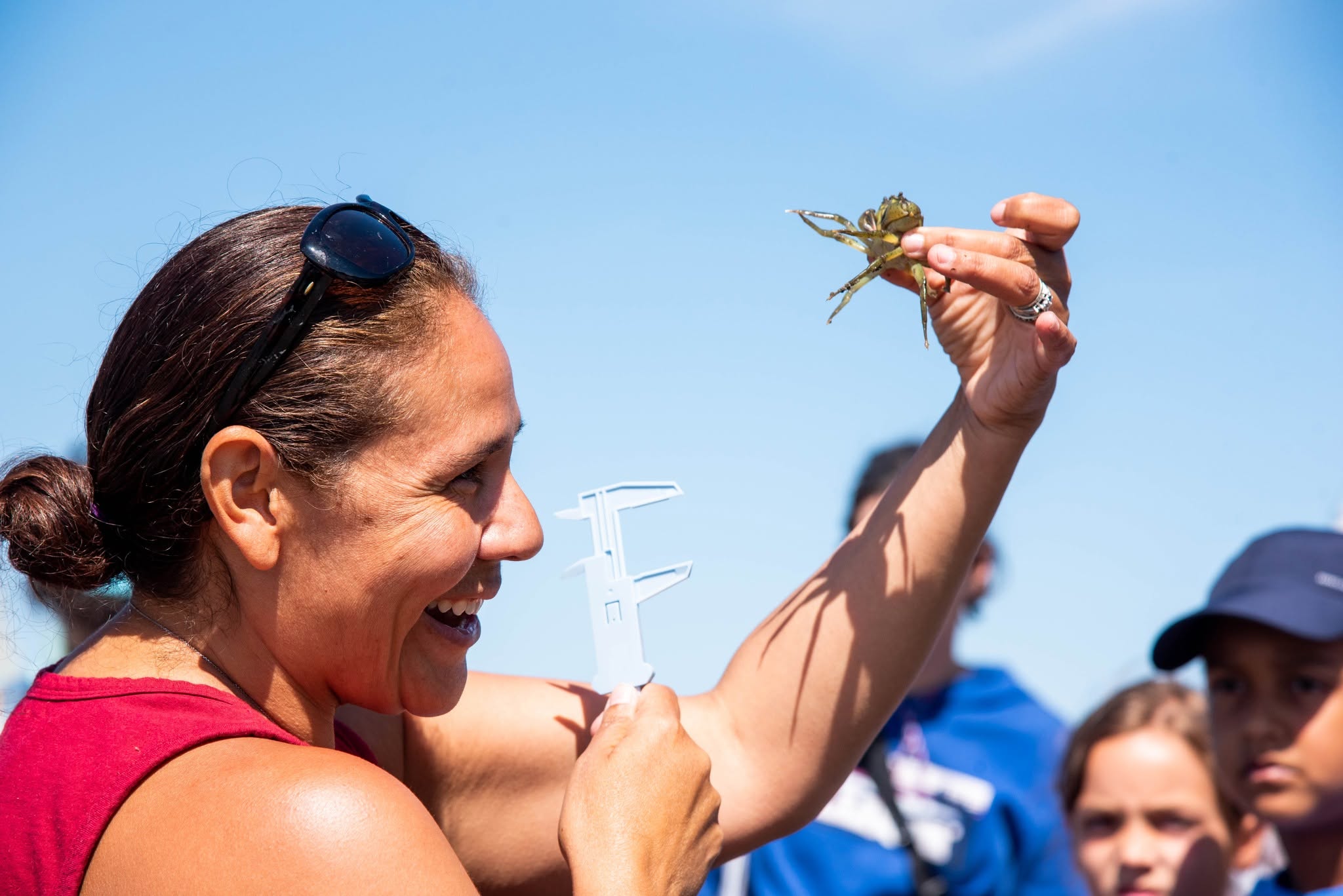
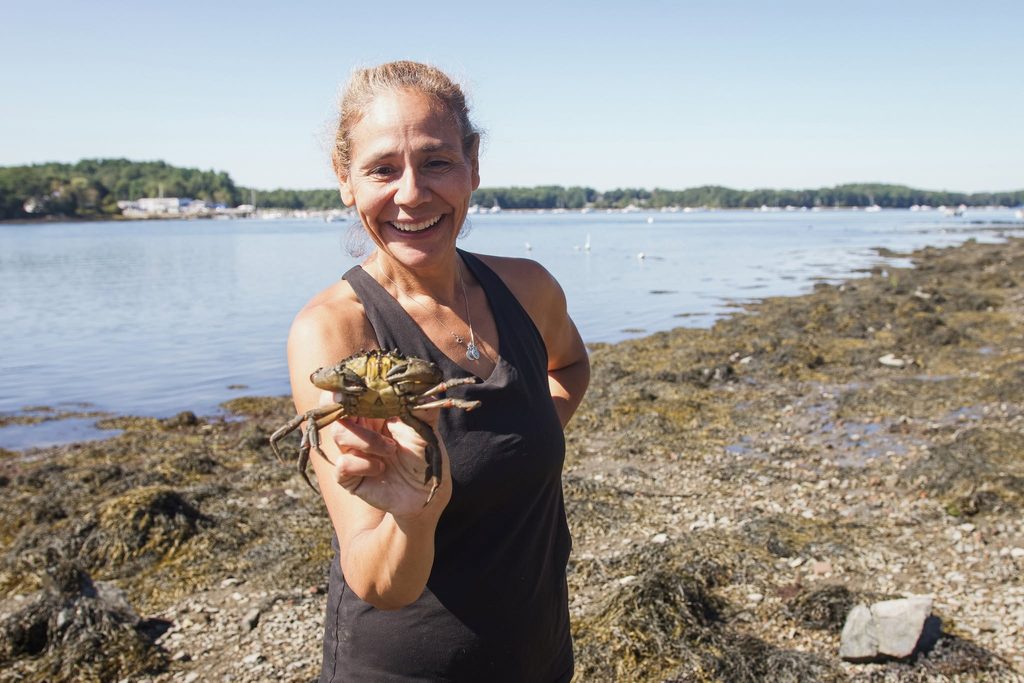
Dr. Gabriela Bradt has spent more than ten years working on what to do about a crab that’s been in New England for over 200 years. Her answer surprised me: she doesn’t think wiping them out is the goal anymore. So what is the goal? And why does she think the word “invasive” has been getting in the way?
About Dr. Gabby Bradt
Dr. Gabby Bradt is the Fisheries and Aquaculture Extension Specialist for UNH Cooperative Extension and New Hampshire Sea Grant. Since 2011, she’s worked with New Hampshire fishermen, seafood producers, and consumers to promote sustainable fisheries and local seafood markets, including getting people to eat underutilized seafood like sea vegetables, green crabs, and lesser-known fish. She also leads outreach, education, and research on marine debris, the fishing industry, and coastal conservation, and she started the Great Green Crab Hunts.
Gabby holds a B.A. from Mount Holyoke College, an M.A. from Bryn Mawr College, and a Ph.D. in Zoology from UNH, where she studied baby squid. (Hence the “Dr. Squidgy” license plate.) She’s also a mom of three who often brings her kids into the field.
And she’s a family friend! She interned for my dad at the EPA, and years later we worked across the hall from each other at UNH.
In this episode, we chat about…
- How someone with a “baby squid degree” ended up as one of New England’s go-to green crab people, and the very un-marine detours she took along the way
- The thing Gabby wishes someone had told her in grad school about careers off the tenure track
- How she actually balances three kids, a busy extension job, and a project that never quite ends (spoiler: it involves learning to say no)
- Why a species that’s been here since the early 1800s only became a “problem” once it started costing people money, and what that says about how we treat scientists’ warnings
- Should we try to eradicate a crab that’s been part of the ecosystem for two centuries? Gabby’s answer is more nuanced than you’d expect (and it has lessons for lionfish and blue catfish, too)
- The two-summer mystery of figuring out when a green crab is about to molt, and the collaboration that finally cracked it
- What a citizen science project looks like when you’re not trying to count every crab, and what it would take to turn green crabs into a real market (Gabby makes an on-air funding pitch!)
Lessons from My Chat with Gabby
You’re allowed to change your mind.
Gabby’s path from pre-med to neurobiology to squid to lakes to crabs is proof that what you study doesn’t lock you in. She’s emphatic that the “graduate with your whole life figured out” script just isn’t how most science careers actually happen.
We get into how she pieced hers together, and what she tells her own kids now when they say they don’t know what they want to do.
Eradication isn’t the goal. Balance is.
For green crabs in the northeast US, Gabby argues it’s no longer realistic or even desirable to wipe them out. Markets can help keep numbers down, but she doesn’t think green crabs should be regulated like a traditional fishery or treated like the next gold rush.
The real payoff is a healthier estuary where native species get a fighting chance. As she puts it: “Don’t put all your crabs in one basket.” She also gets into what’s actually holding a green crab market back right now.
The words we use change what people do.
Calling green crabs “invasive” made some people assume they weren’t safe to eat, and the military language of “invasions” puts the blame in the wrong place.
“This is a human problem. It is not a green crab problem,” Gabby says. She explains what happened when she changed her pitch, and why “eat the invasive” can tip into greenwashing.
Honestly, it’s a lesson that reaches way beyond crabs and into how all of us talk about conservation.
Connect with Gabby
- Learn more about NH SeaGrant’s Green Crab project
- Get involved in the Great Green Crab Hunts
- Reach out to Gabby here
Enjoyed This Episode?
Did this episode resonate with you? Help the show reach even more ocean lovers!
⭐ Leave a rating/review/comment on Apple Podcasts, Spotify, or YouTube — it’s the single biggest thing that helps people find the show.
💬 Share it with one friend who’s been talking about wanting to do something for the ocean.
🌊 Follow the show so you don’t miss the next episode.
And come hang out with me on Instagram! I’d love to hear what you thought of this episode!

« Previous Post
Next Post »
Leave a Reply
Latest Episodes
catch up on the


