


Better Data, Better Fishing: Inside Rhode Island’s Recreational Fishing Survey with Nate Andrews
February 3, 2026
Apple Podcasts | Spotify
In this episode, I sit down with Nate Andrews, a fisheries specialist with the Rhode Island Division of Marine Fisheries and my dear boss, to talk about the data behind recreational fishing and why it matters so much more than most people realize.
Nate takes me inside the Access Point Angler Intercept Survey (APAIS), a coast-wide survey that helps estimate recreational fishing catch and effort from Maine to Florida. We talk through how shoreline interviews work, how the data feeds into NOAA’s Marine Recreational Information Program (MRIP), and how even a small number of fish can scale up to influence major fisheries management decisions.
We also dig into what “catch per unit effort” actually means, why consistency and training are critical for good science, and how anglers play a direct role in shaping regulations just by participating in surveys. This conversation really highlights how better data leads to better decisions and ultimately, better fishing.
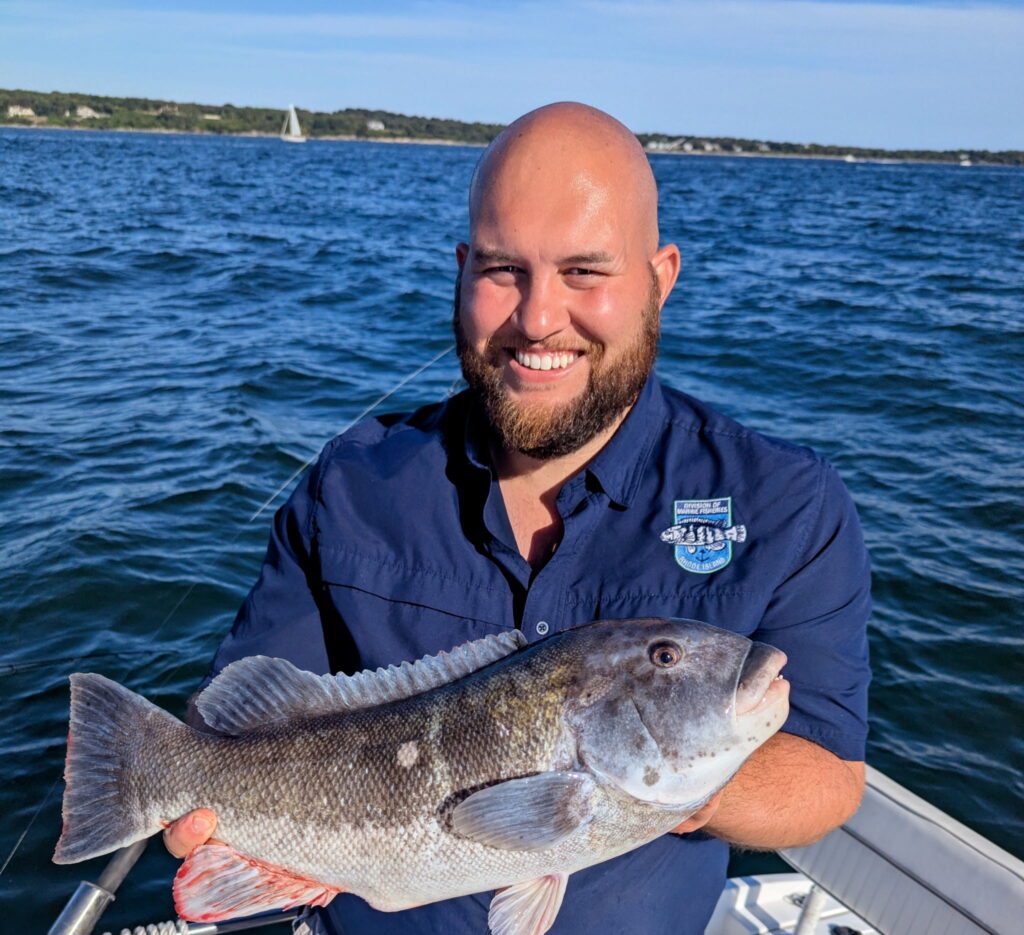
Beyond the science, Nate shares his personal journey into marine conservation, from childhood fishing in Rhode Island to science fairs, fieldwork, and eventually working on one of the most important fisheries data programs on the East Coast. We talk about fish identification, stewardship, ethical harvesting, and what it really means to respect the species and ecosystems we rely on.
This episode is as much about people as it is about fish. Nate and I reflect on the importance of trust, community involvement, and listening to anglers as stakeholders in ocean management. If you’ve ever wondered how fishing data is collected, how decisions are made, or how you can get involved in protecting the ocean, this conversation will give you a whole new perspective on what happens behind every cast.
🔗 Episode Resources & Links
Programs, Agencies & Surveys
- Access Point Angler Intercept Survey (APAIS)
- NOAA Marine Recreational Information Program (MRIP)
- Rhode Island Division of Marine Fisheries (DMF)
- Rhode Island Department of Environmental Management (DEM)
- Atlantic States Marine Fisheries Commission (ASMFC)
Fish Identification & Learning Resources
- IGFA Fish Identification Guide
- Save The Bay Field Guide to Marine Species
- Save The Bay (Rhode Island)
Organizations Mentioned
Images & Visuals
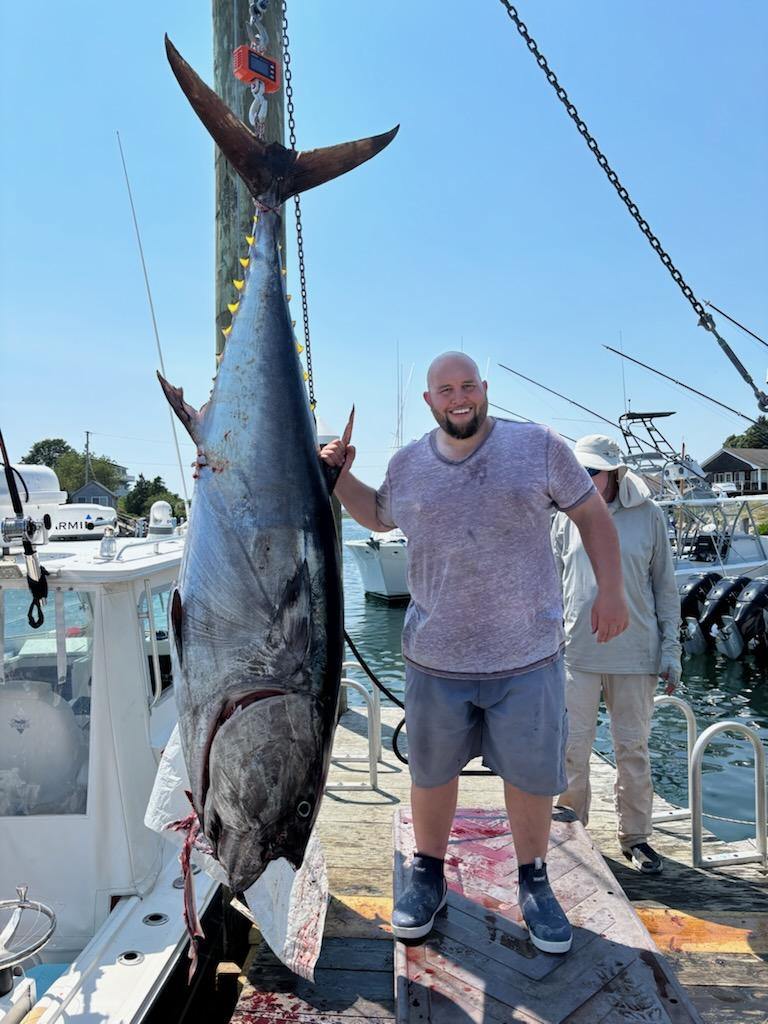
Here’s the photo of the yellowfin and bigeye tuna that Nate and I discussed in the episode. Can you tell the difference between the two?
Get Involved: Meetings & Public Participation
Jobs & Opportunities
- Recreational Angler Interviewer (APAIS) job posting
(Deadline February 8, 2026)
Follow Nate
- Nate’s fish print art on Instagram: @4oh1_art
Lend your Voice
If this episode resonated with you, I’d love to hear your thoughts. You can leave a comment on this page, share the episode with someone who loves fishing or the ocean, or leave a review wherever you listen to podcasts. Your voice matters! And conversations like this are always better when more people are part of them.
